One framework, 400+ properties.
The Bayer Animal Health acquisition left Elanco holding 400+ websites and products with no shared way to assess them. Continuous Discovery is the operating framework I designed and ran in response — objectives, plan, problem, solution, deliverables — a timeboxed loop any team completes in one to six weeks. It became the default cadence for new dev teams, and its outputs seeded the design system and ElancoGPT.
research & design
cadence
ElancoGPT
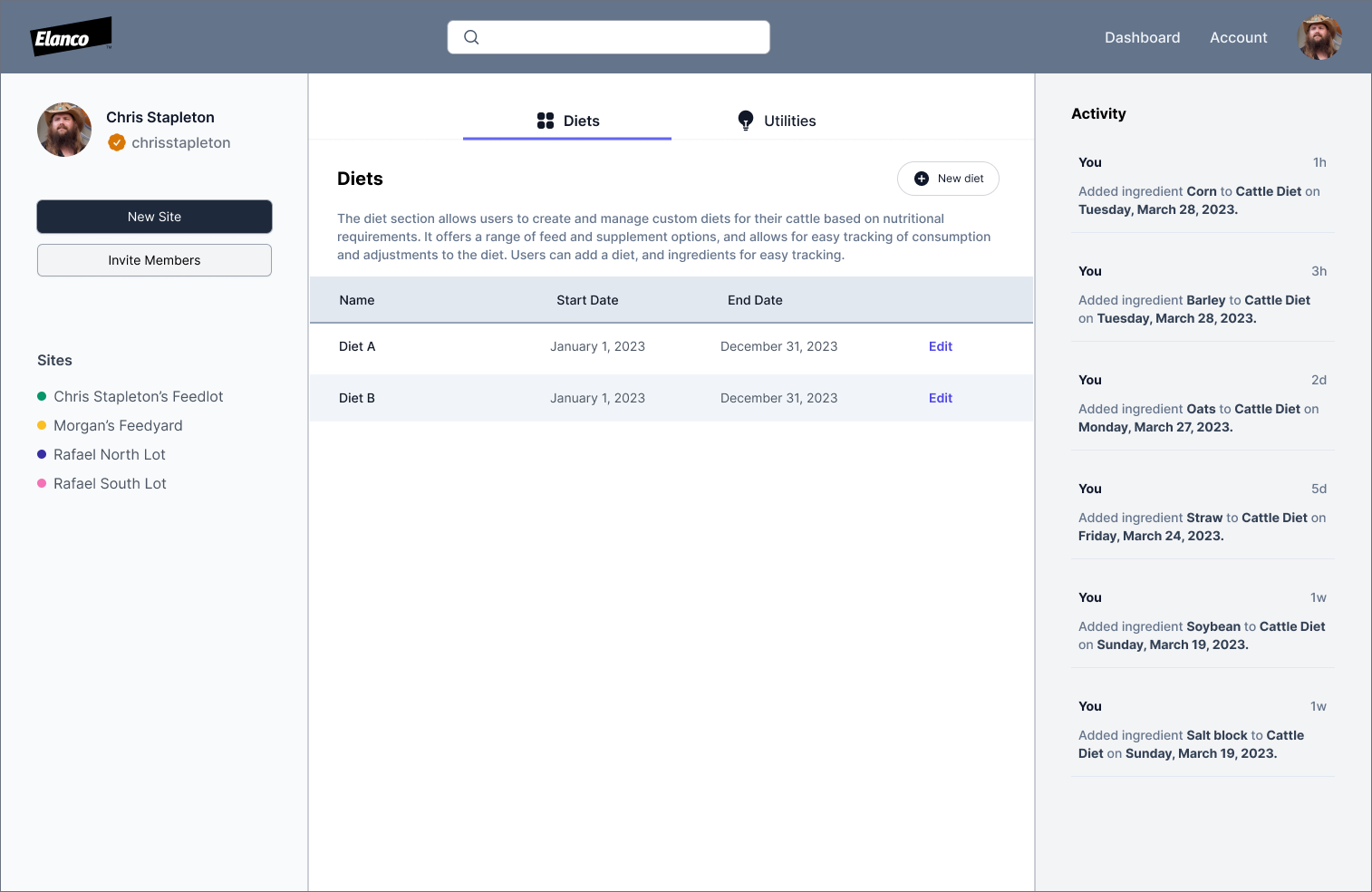
The merger folded two digital estates into one.
400+ properties on different stacks, from different agencies, for different markets, and every keep, merge, retire, or rebuild decision needed evidence no two teams gathered the same way.
My bet: treat discovery as a designed system. One week of setup, a hard one-to-four-week cap on research and design, a fixed deliverable set every cycle, a timebox that forces the only question a portfolio cares about.
400+ properties across two merged estates, no shared assessment shape and no comparable outputs.
Discovery as a repeatable, timeboxed loop, the same five stages whether a cycle takes one week or six.
Research & design capped at four weeks; iteration earns more time, open-ended research never does.
Solution Engineering owns the gates. From objectives on, the loop is mine.
Pre-discovery triage keeps unfunded work out; everything from objectives to deliverables is the system I designed and ran. The loop back from delivery is what makes it continuous rather than a one-shot phase.
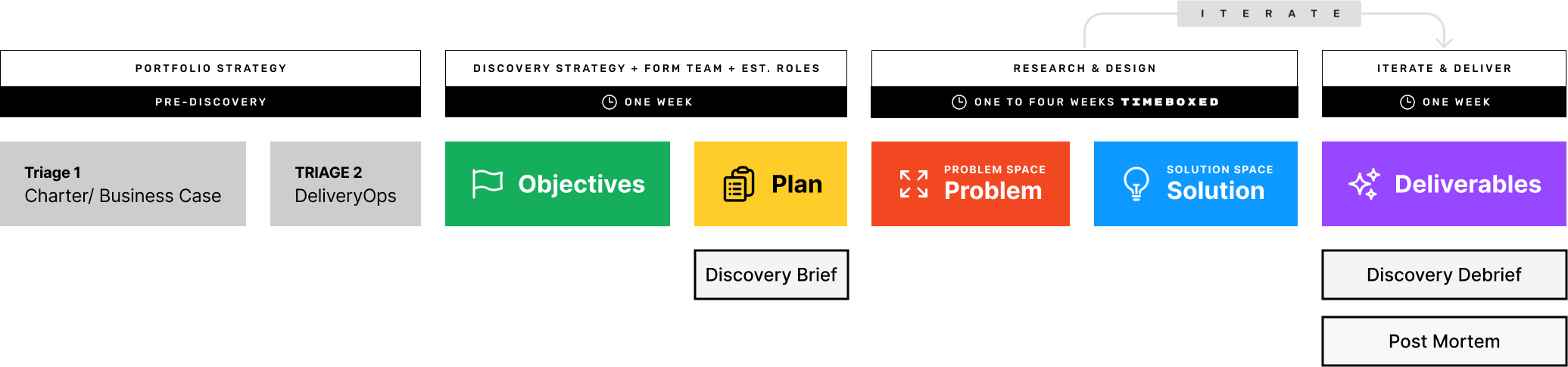
Pre-discovery triage
Charter / business case, then DeliveryOps. No gate, no team. Owned upstream, my system starts where this ends.
charter · deliveryopsObjectives + plan
Discovery assessment, stakeholder ID, discovery brief, brief deck, kickoff. One week, no exceptions.
brief · kickoff-readyProblem space
Interviews, RACI, experience maps, usability testing, content inventory, framed as JTBD opportunity statements.
jtbd · opportunitySolution space
Affinity mapping, journeys, personas, wireframes, prototypes, tech POCs, converging on an opportunity solution tree.
ost · prototypeIterate & deliver
Discovery debrief, debrief deck, journey / service maps, user needs statements. Iterate loops back; deliver closes the cycle.
debrief · mapsContinuous
Delivery feeds the next objective. The same shape carried a portfolio instead of a project.
→ next cycle400+ properties. Two estates. No shared shape.
In 2020, Elanco Animal Health closed its acquisition of Bayer Animal Health, folding two independent digital estates into one company. Brand sites, species portals, product pages, internal tools: from two companies, dozens of agencies, and every era of the web. The merged portfolio couldn’t be reasoned about, because no two properties had been assessed the same way.
Two gates sort the portfolio before any discovery spends a dollar.
Gate one asks for a charter and business case; gate two asks DeliveryOps whether a team can carry it. Properties route toward modernize, merge, keep, or retire. Only the ones that clear both gates get a discovery team. Sorting is a collaboration with Solution Engineers and business stakeholders, then the engineering teams the work lands on, each property sequenced by its priority against the rest of the portfolio.
Weeks, not quarters.
One week to form the team and plan. One to four weeks — hard cap — for research and design. One week to iterate and deliver. The timebox is what let the same designers cover a portfolio instead of a project.
First the box frames the need.
Interviews, RACI, experience maps, usability testing, content inventory, the raw material of the problem. It converges on JTBD opportunity statements: what the user is trying to get done, stated so a solution can answer it.
Then the same box answers it.
Affinity mapping, journeys, personas, wireframes, prototypes, tech POCs, run inside the same one-to-four-week timebox. They converge on an opportunity solution tree: the options, ranked against the opportunity they serve.
Every cycle ends on the same four artifacts.
Debrief deck, journey map, service / systems map, post-mortem, identical shape whether the cycle took one week or six. Comparable outputs are what turned hundreds of one-off assessments into a portfolio view, and what the design system and ElancoGPT teams built on next.
Inside one cycle: EKS Modernization.
UpLook is the feedlot-management tool inside Elanco Knowledge Solutions, one of nine proprietary services for Beef and Dairy operators. This cycle ran against Passport, its enrollment system. Objective: enable self-service onboarding by naming the customer-experience, business-process, and technology changes required.
Key pain points for UpLook customers in the current EKS Passport onboarding? → Stakeholder map + interviews, current-state blueprint.
How do we design self-service onboarding that improves CX while holding security and compliance? → Future-state blueprint.
Twelve interviews affinity-mapped into three themes — self-service enrollment, data validation & accuracy, communication & collaboration — answered by four recommendations:
Make the sales process legible.
Clearly communicate who does what across account reps and sales; role confusion was the top frontstage pain.
One source of truth for forms.
Sales rep, EKS team, and customer see the same information, ending the version drift that stalled enrollments.
Automate what CRM already knows.
Sync form fields with CRM and identity management to cut errors, manual entry, and documentation churn.
Standardize the enrollment steps.
Eight steps — select, initiate, configure, provision, migrate, train, integrate — became the backbone of the self-service flow and the modernized UpLook.
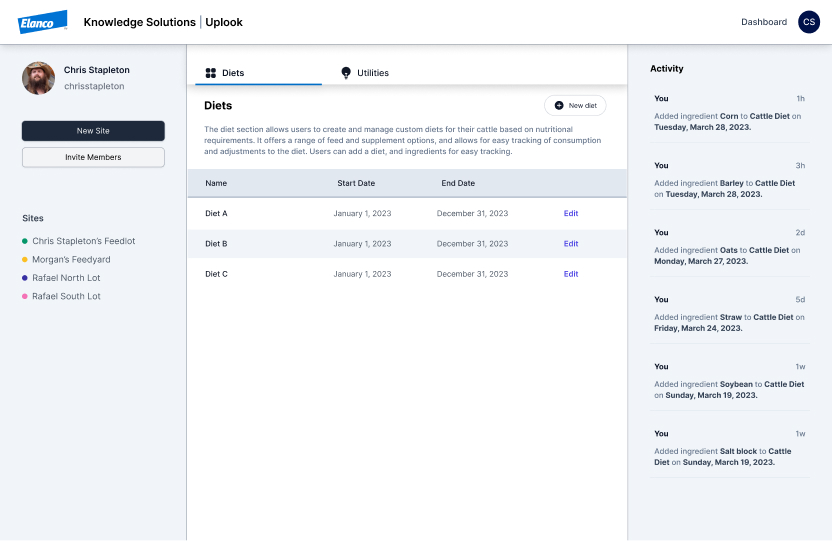
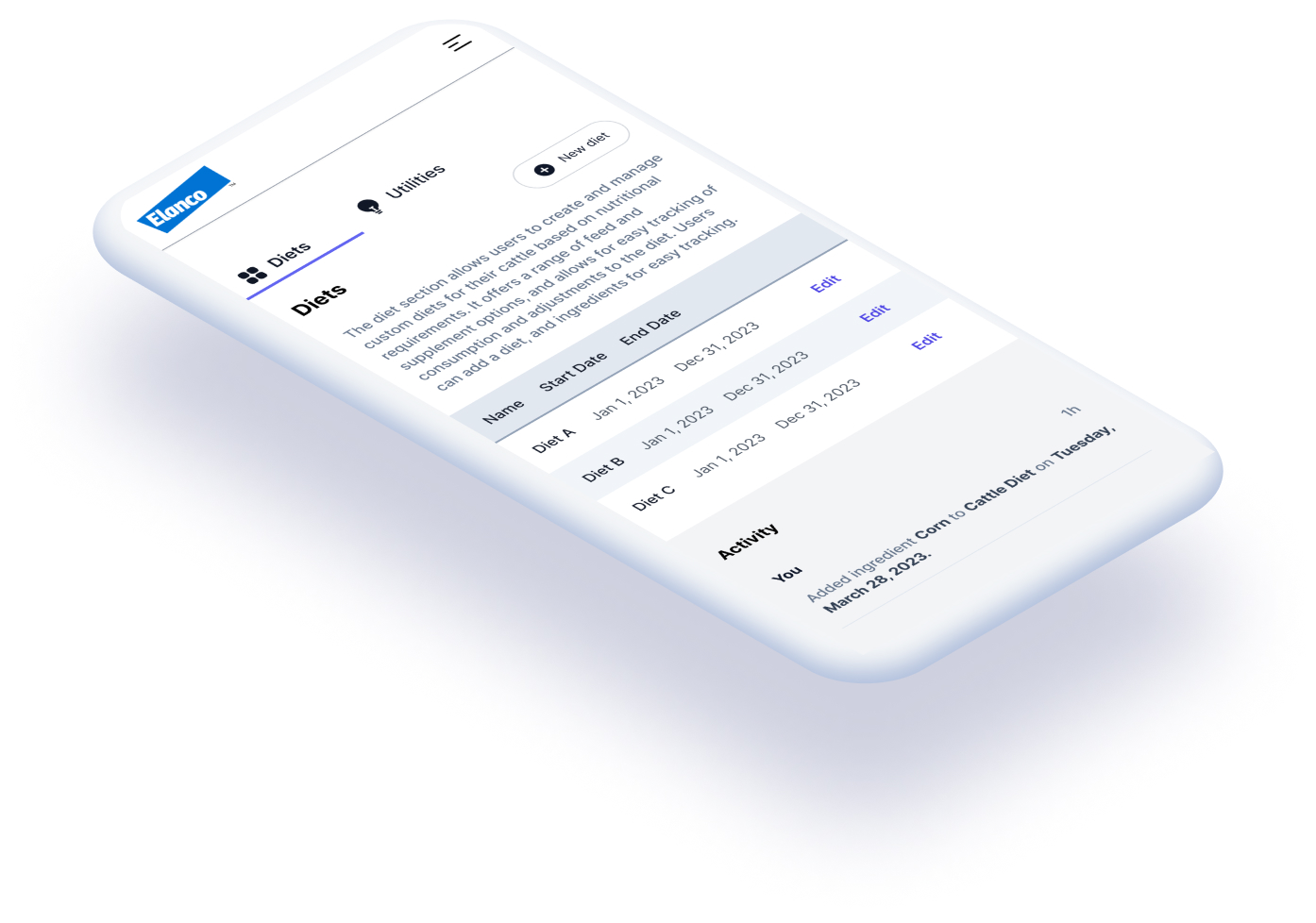
EKS Modernization · UpLook feedlot management · nodes rendered in D3 from a link model.
“Tell me what I need to do. If it doesn’t drive action, it won’t work.”
- Goal
- Maintain system & app health: monitor alerts, triage security vulnerabilities, and remediate on standardized processes.
- Traits
- Task-oriented · data-driven · strategic · analytical
A known audience, a lower-stakes loop.
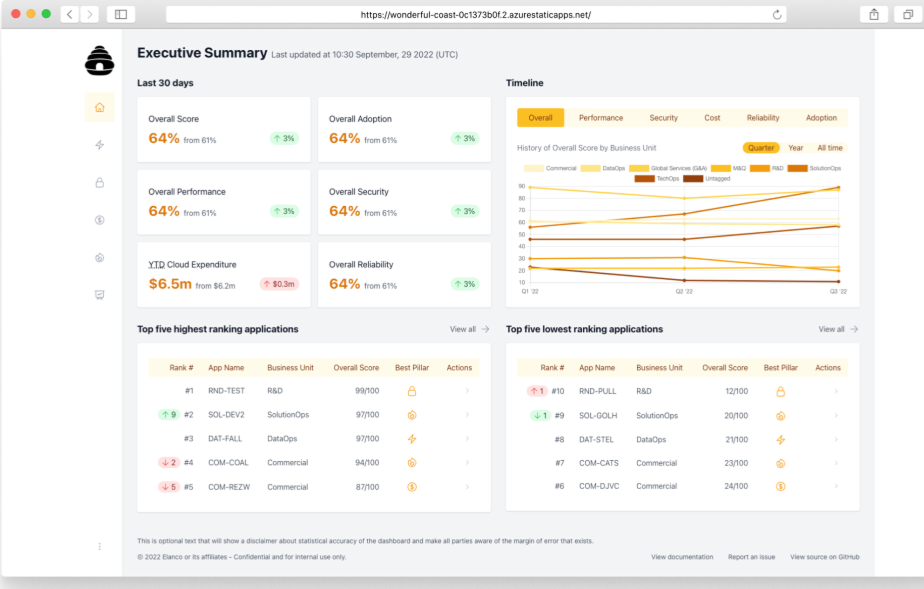
HoneyBee’s primary user is the System Custodian / Delegate, accountable for keeping a portfolio of applications healthy. Discovery framed the whole dashboard around one test: does a screen turn a signal into a next action?
An internal, read-mostly tool with a known audience carried less risk than a customer-facing rebuild, the right place to run the loop end-to-end and pressure-test the deliverable set before EKS / UpLook.
Timeboxed 1–6 weeks end to end · previously open-ended.
New dev teams onboarded onto the framework as standard.
Repeatable triage across the inherited estate.
Both built directly on discovery outputs.
The hard timebox.
Open-ended research is how a 400-site portfolio stays unassessed forever. Capping research & design at four weeks — and letting iteration earn more time — is the single decision that made coverage possible.
Ship the triage gates first.
The gates arrived after the first cycles, so early teams ran discovery on properties later retired anyway. Gating the portfolio before designing the loop would have saved those cycles.