Adopted globally. Time-to-answer collapsed.
What a Galliprant query returns.
Every block has provenance. Every block is independently exportable. The user controls which blocks travel to the customer.
The product, in the wild.
One high-fidelity mockup, two live model demos, the shipped surfaces, and the responsive state boards; every screen built on EDS components.
The UX target the build was measured against: Elanco-branded, on-system, accountable by default.
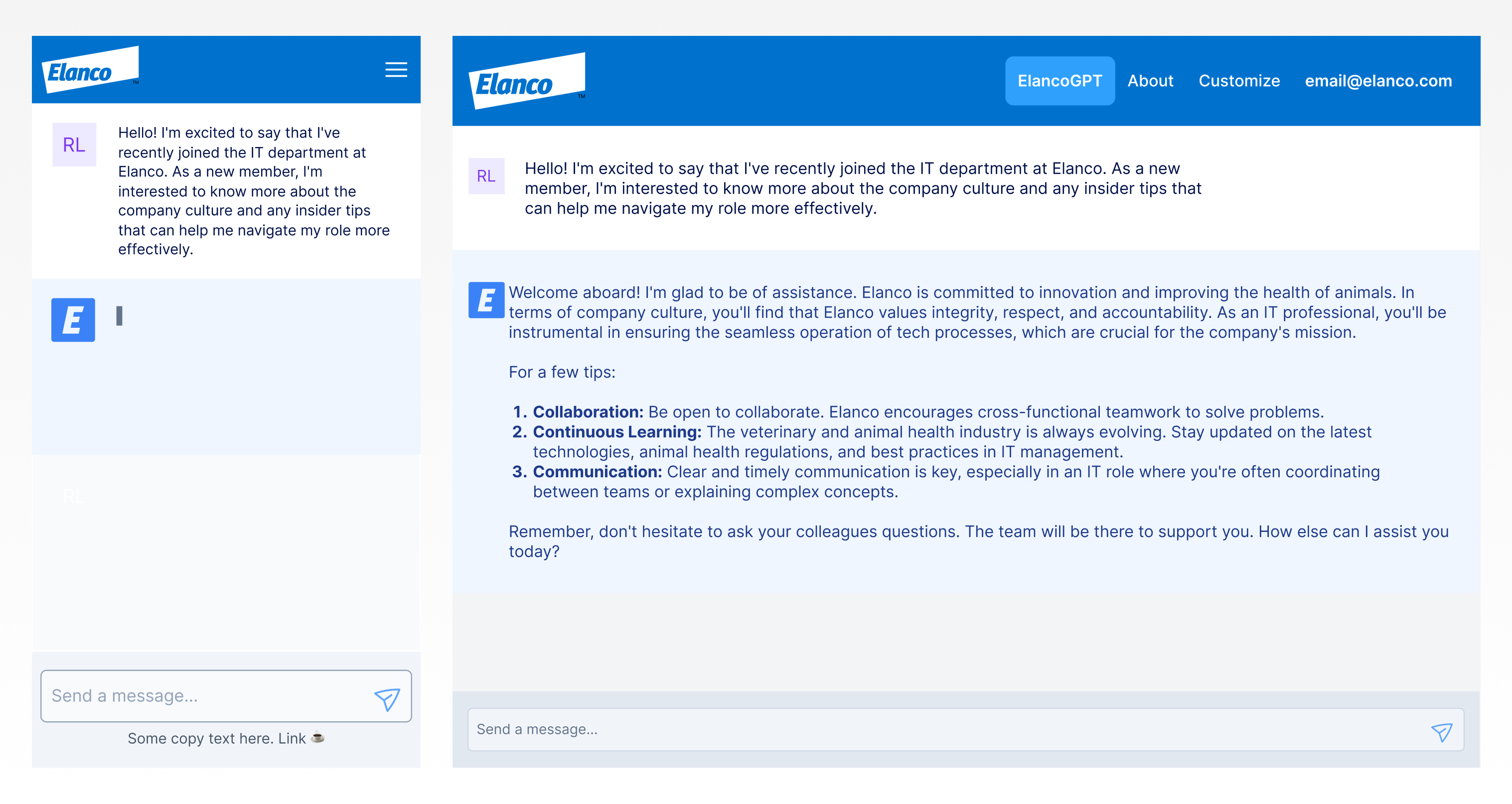
The same surface, federated across OpenAI GPT‑3.5 and Google PaLM 2; the model swap is invisible to the user.
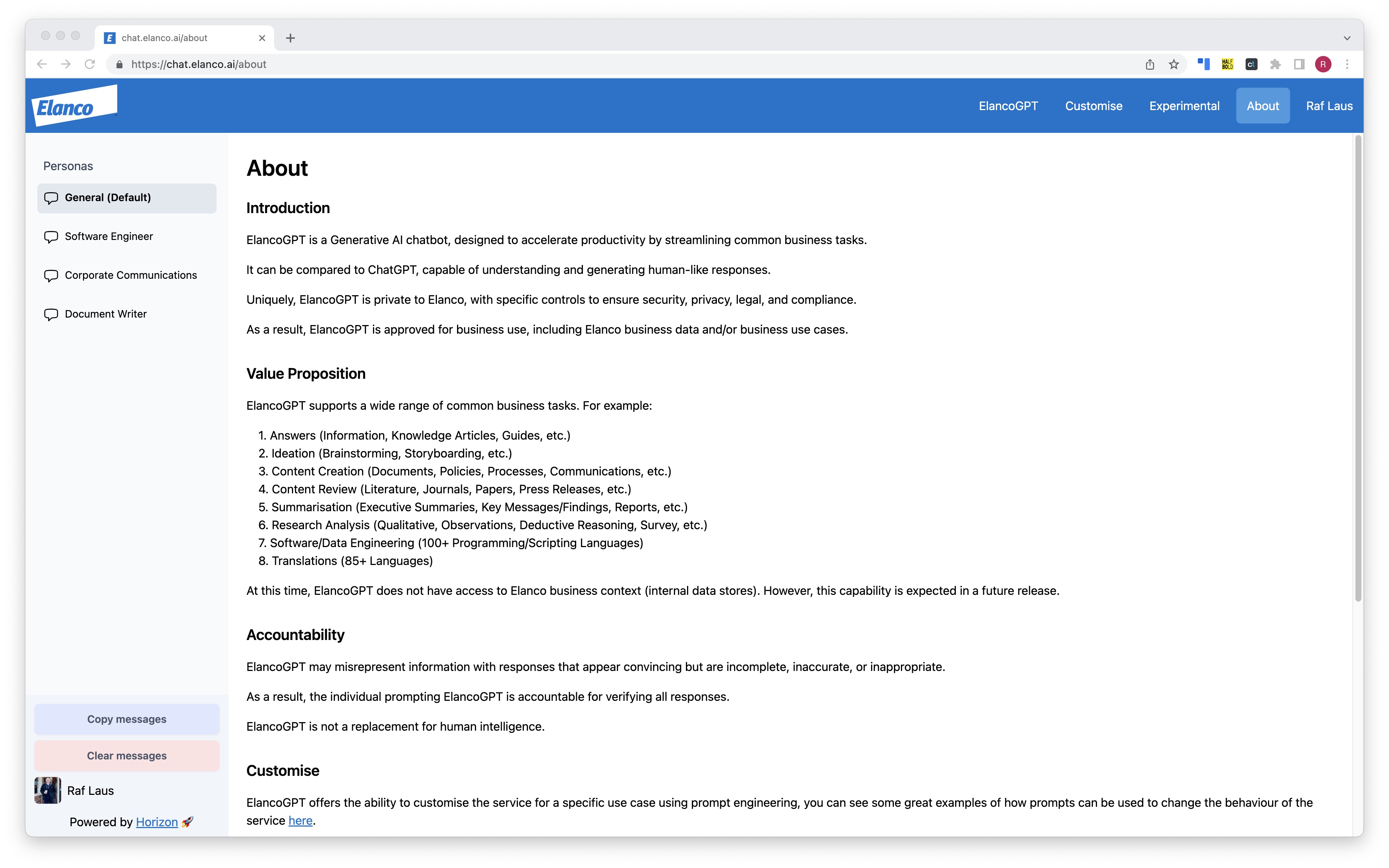
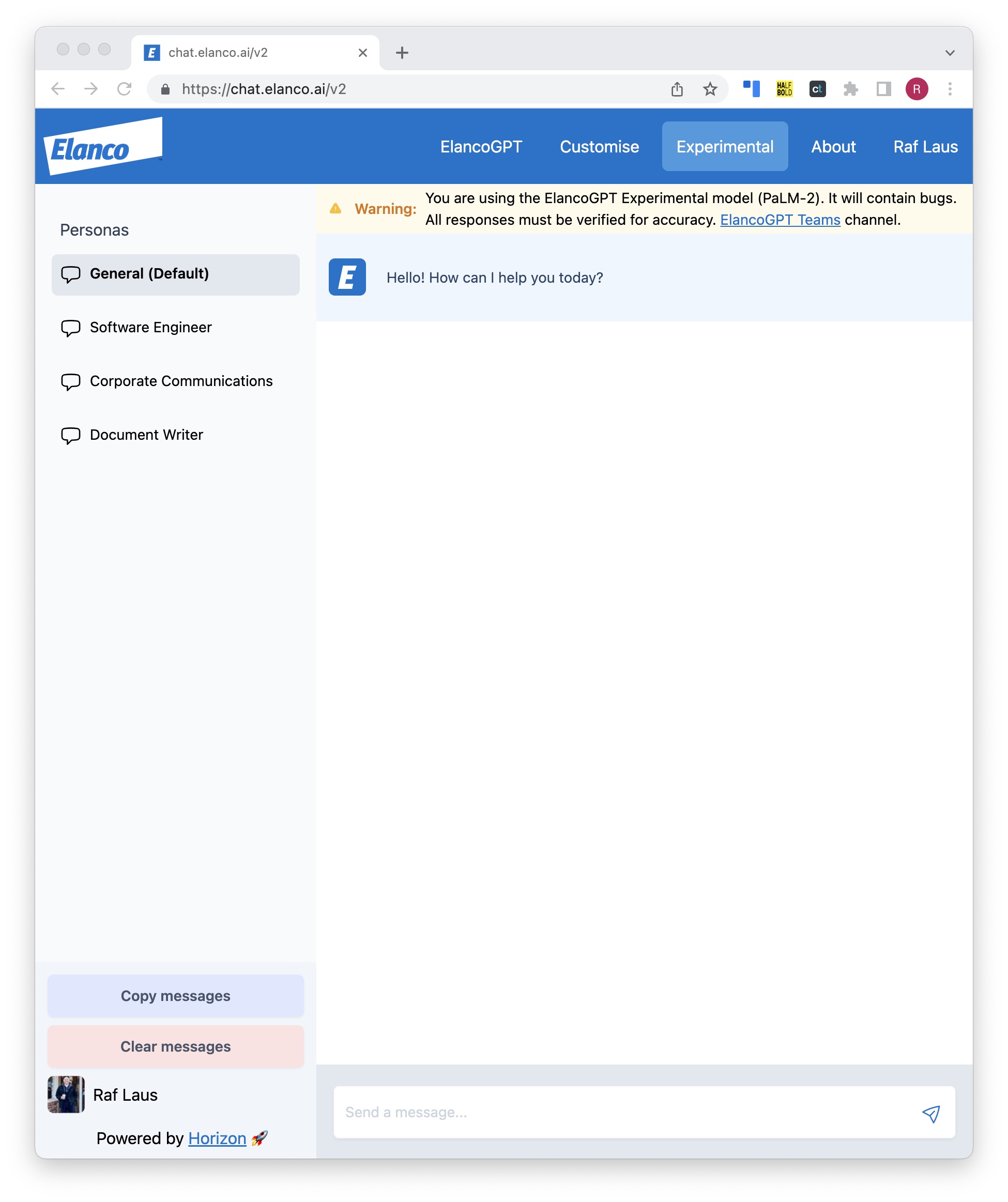
The desktop screens a session actually opens on: default, experimental, and the pages that let a user shape their own. Each shown at full width, on the same EDS chrome.
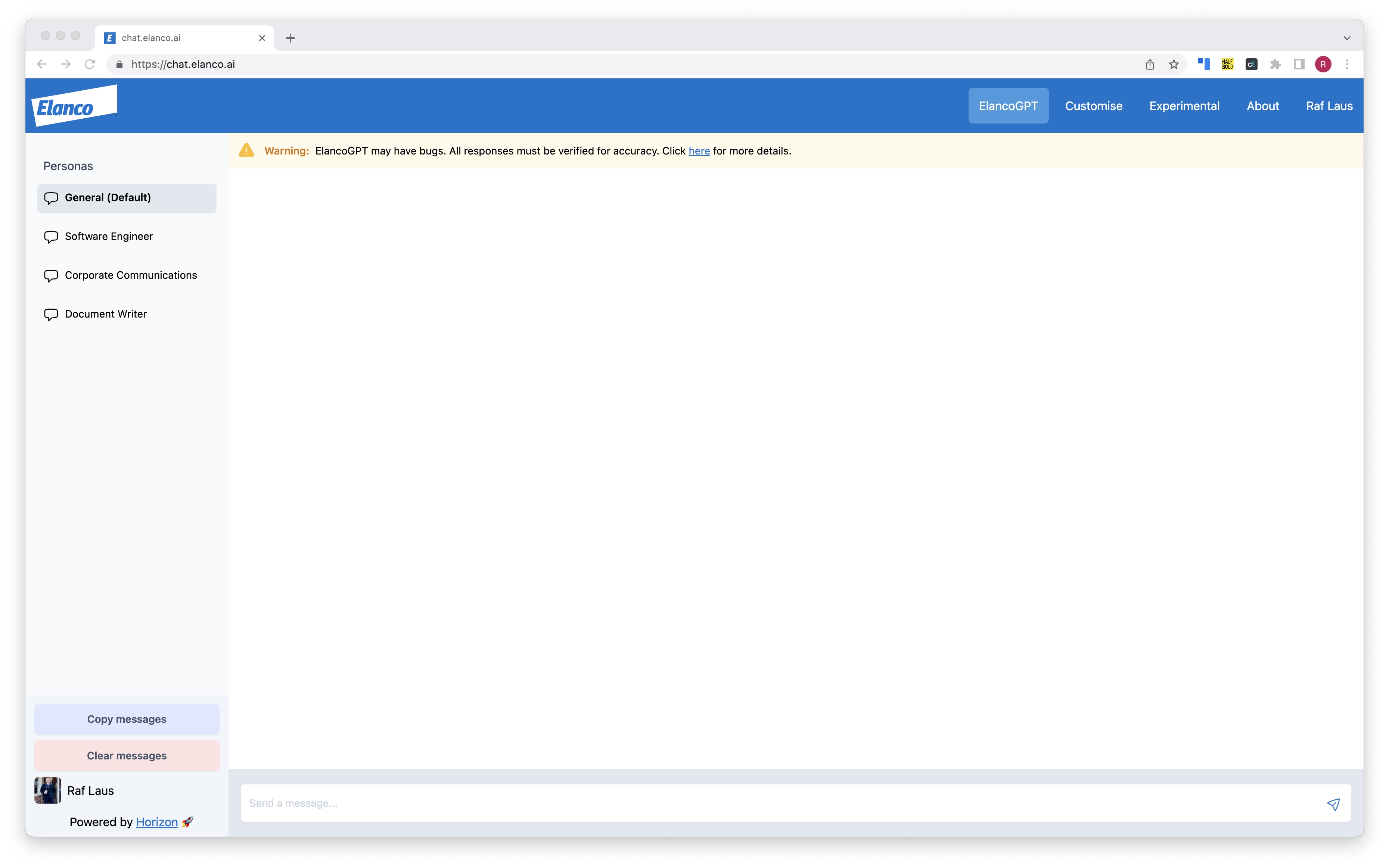
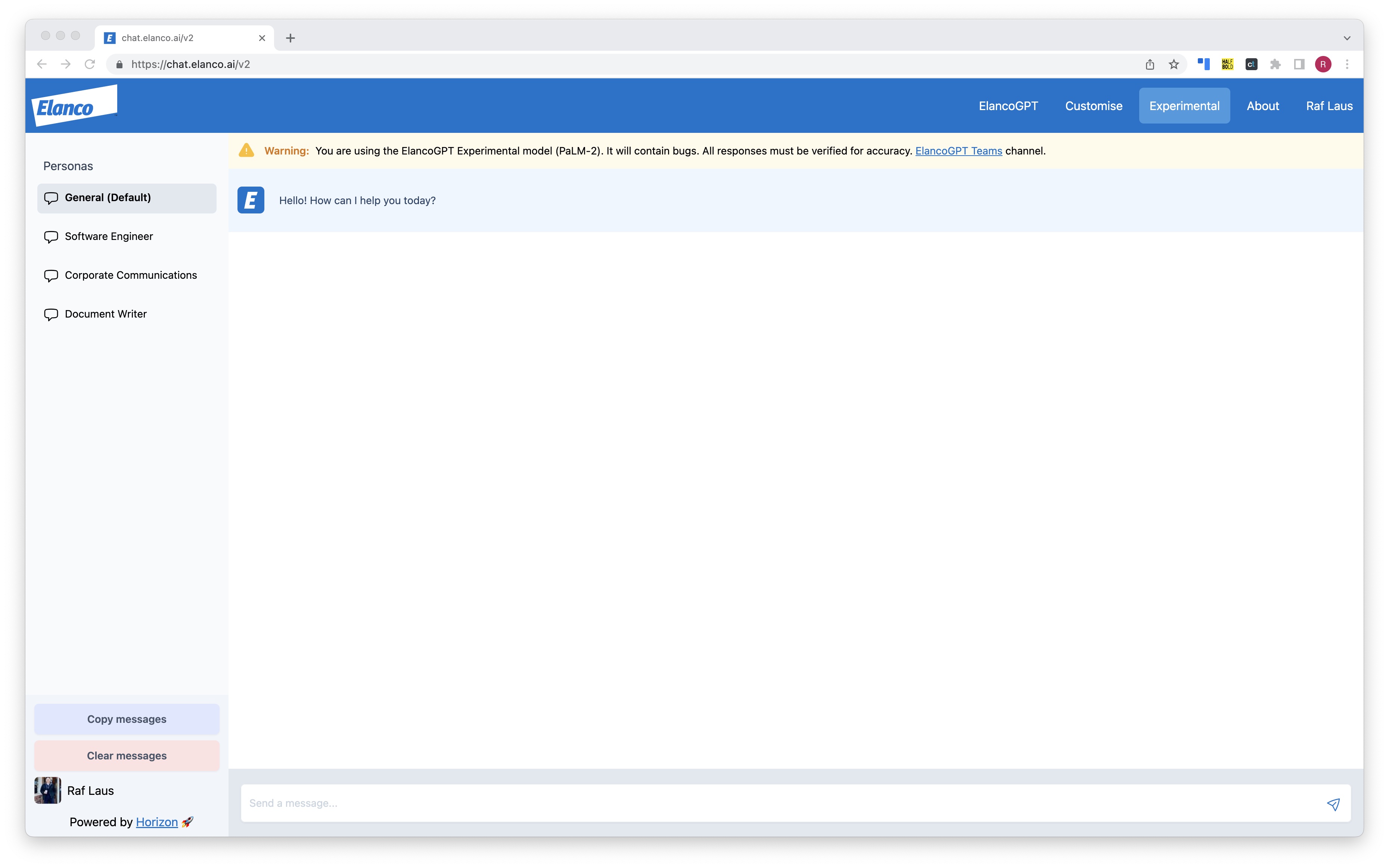
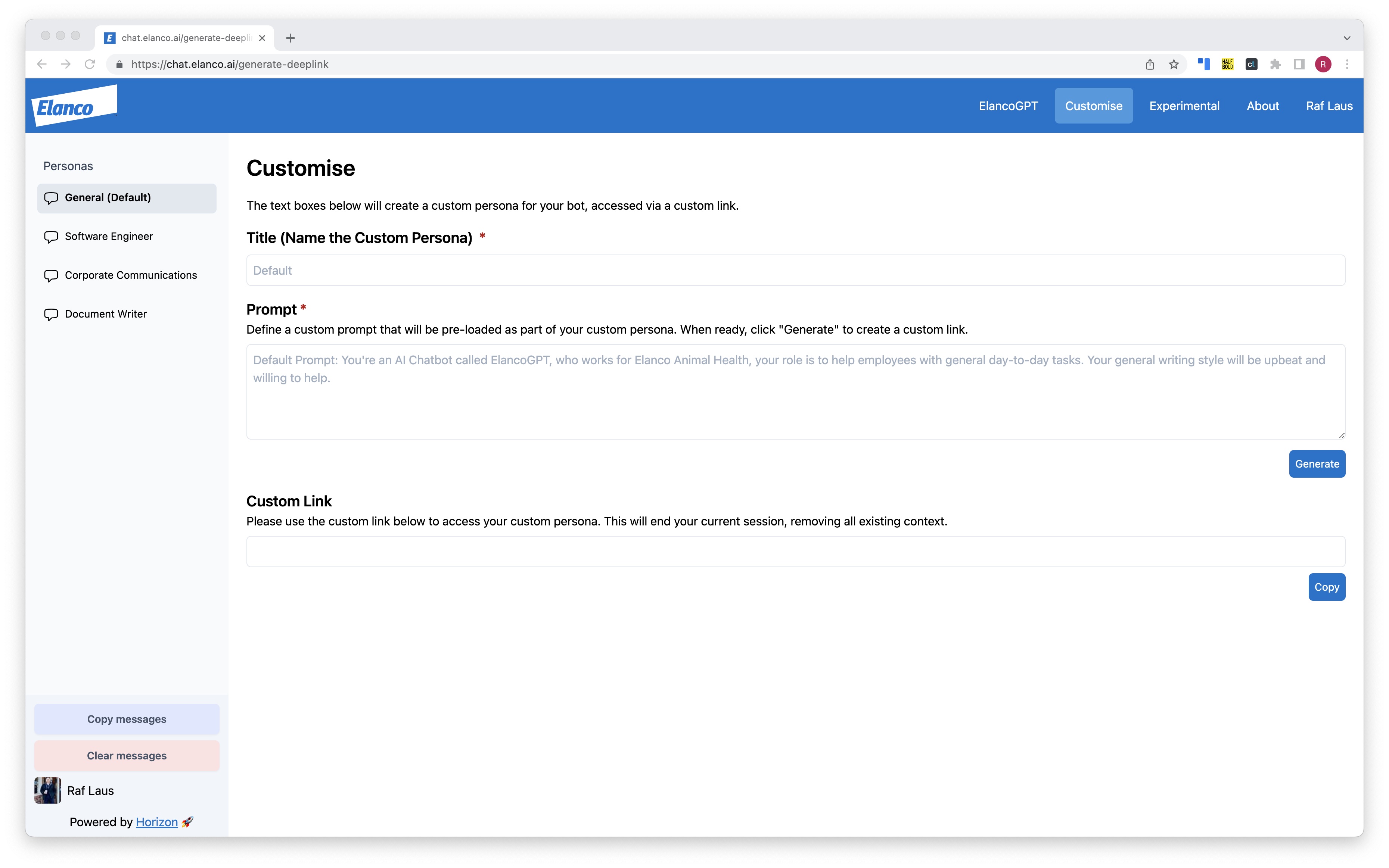
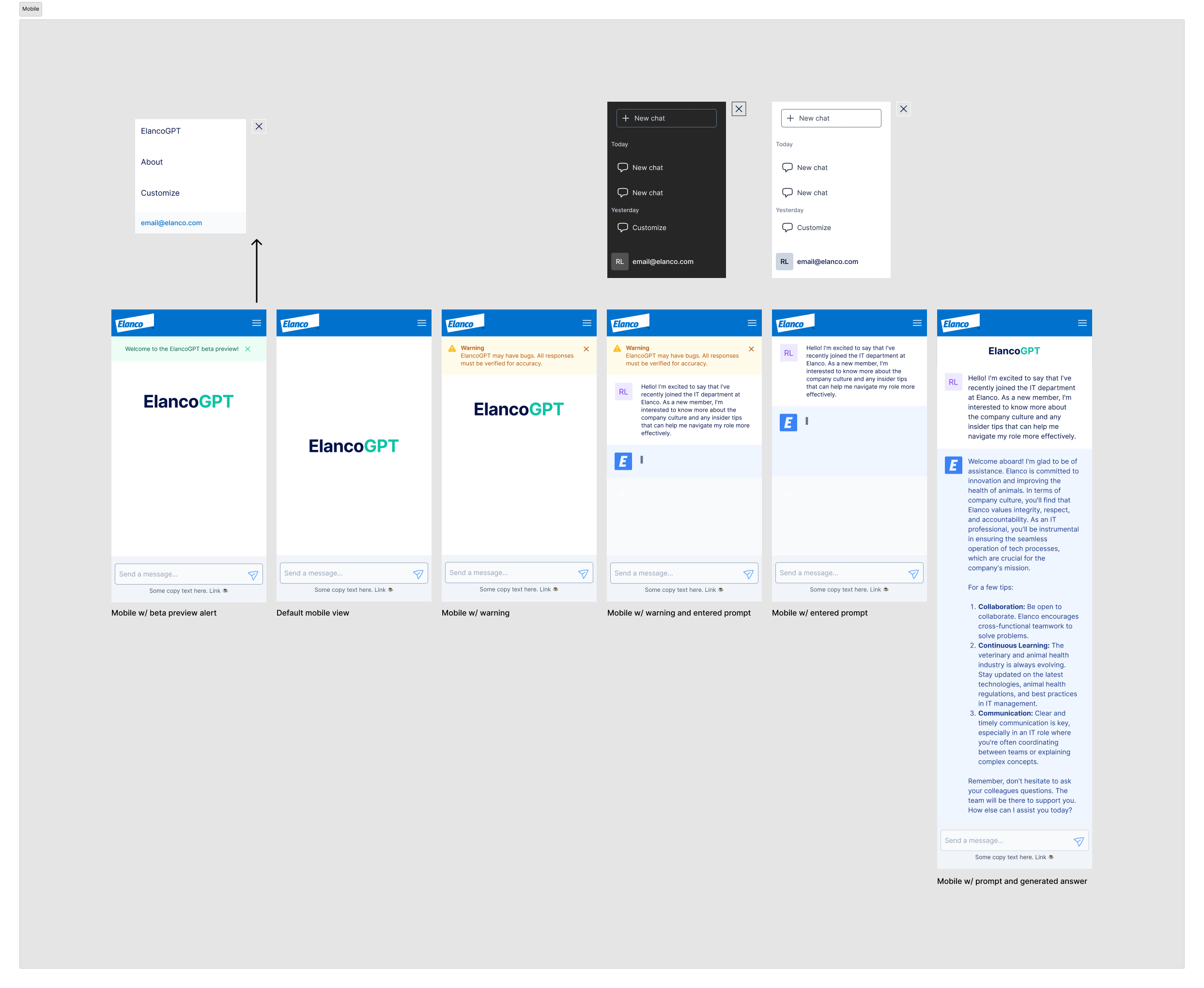
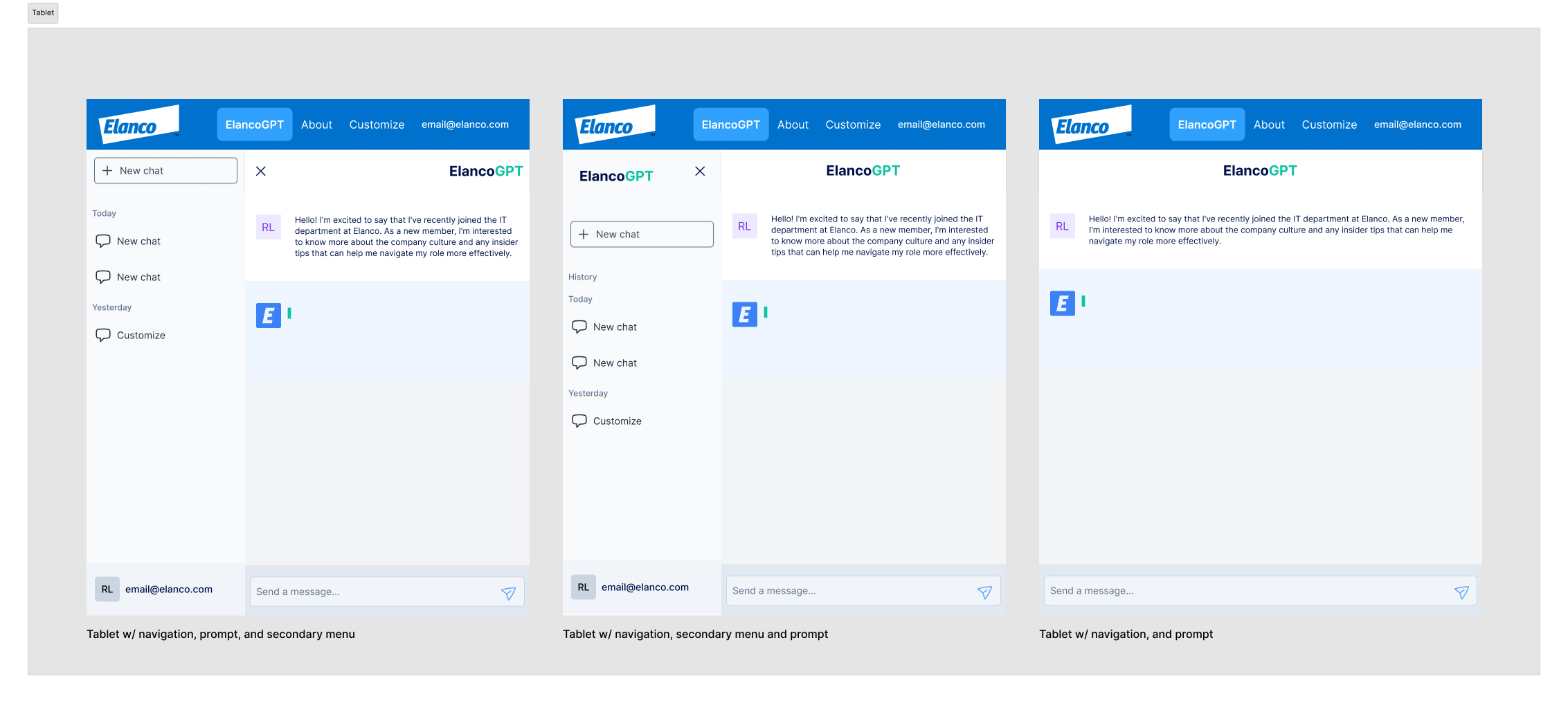
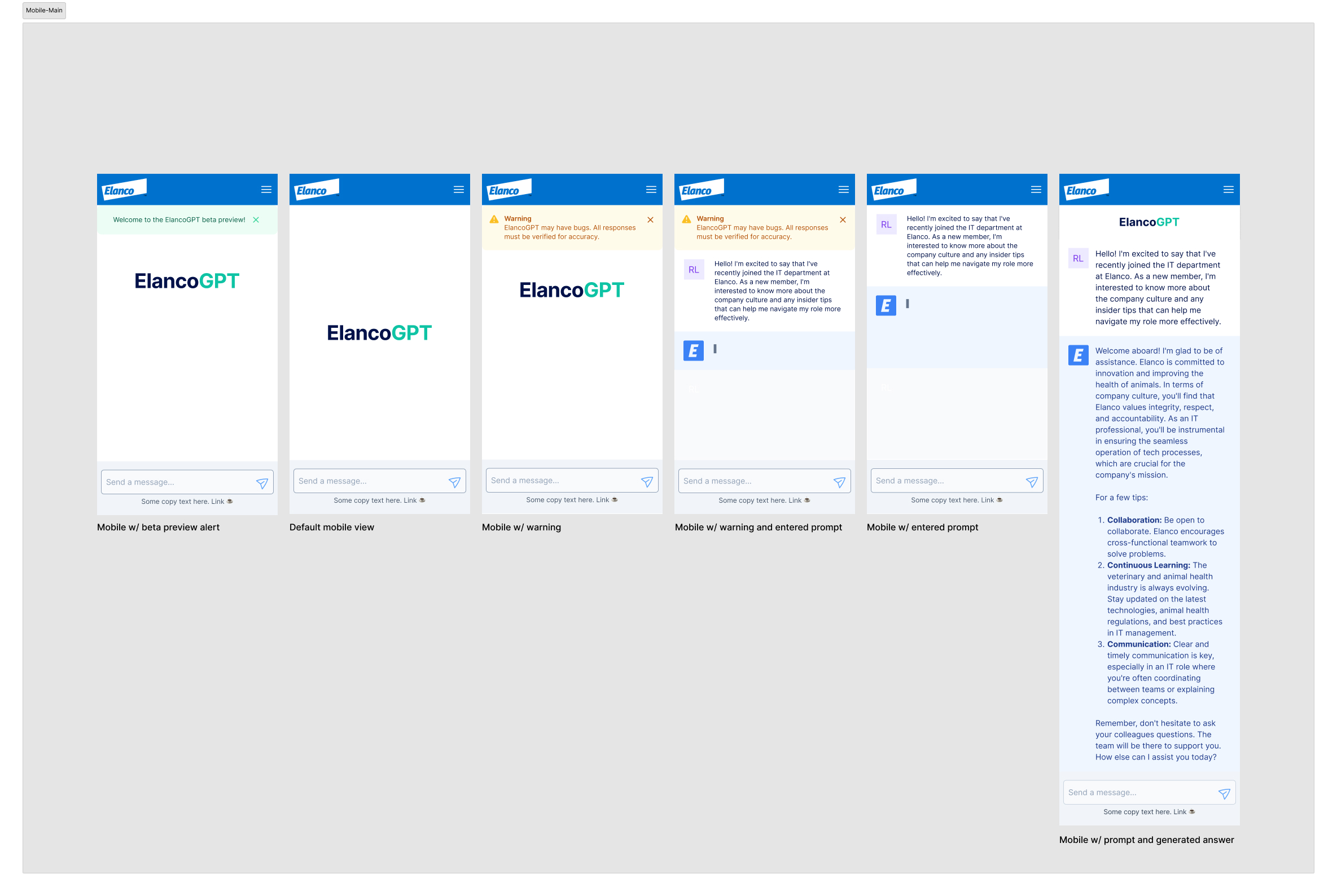
One system across every breakpoint: the full state walk from beta alert to streamed answer.
Structured output, every time.
A chatbot that returns paragraphs is the lowest-value AI surface in an enterprise context. Fact / inference / risk / action made the AI a decision surface, not a reading surface.
Ship the audit queue with v1.
Vet-affairs audit ran on a spreadsheet for the first six months. A purpose-built queue could have surfaced corpus gaps faster.